6 Tools Defining AI for Marketing in 2026: A Technical Review
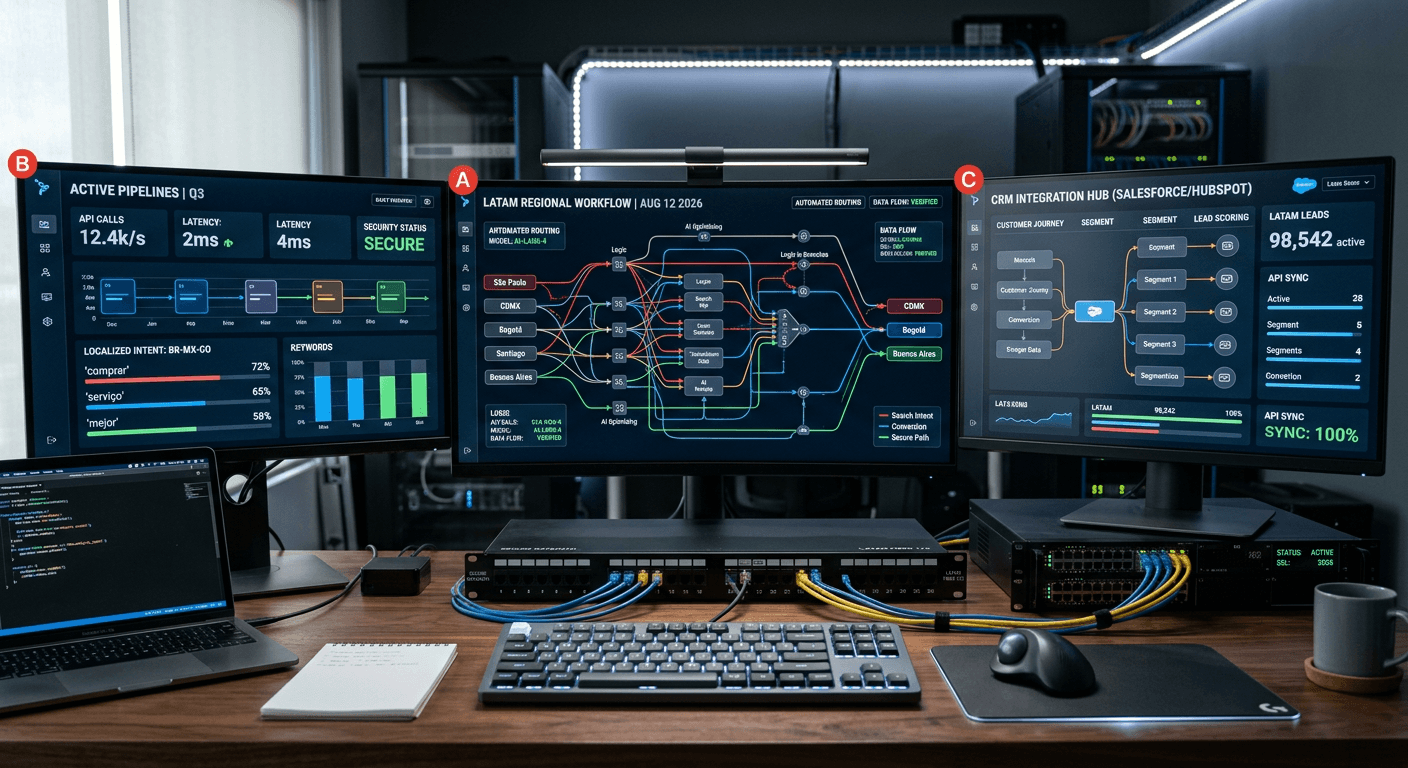
The prevailing assumption about ai for marketing is that the tooling merely replaces human keystrokes with generated text, treating scale as a function of output speed. In reality, modern deployment pipelines fail not at the generation step, but at the context-retention layer. When a digital campaign scales across multiple regional channels without adhering to strict brand voice constraints or local search intent, the output deteriorates into generic spam that active search algorithms immediately penalize. Operational maturity in artificial intelligence in marketing requires moving past standalone prompt boxes to build interconnected systems where data ingestion, audience mapping, and compliance protocols govern every automated asset before it hits a public server.
Quick Summary
Implementing an ai digital marketing stack requires aligning your technical workflows with the right processing models, rather than accumulating disconnected generators. The tooling landscape in 2026 fractures into distinct operational categories based on whether a team requires strict contextual generation, multi-model execution, or seamless CRM data ingestion.
- Standalone token generation is an obsolete metric; structural workflow automation defines modern campaign scalability.
- Contextual memory boundaries dictate whether a system can maintain brand voice across segmented audience cohorts.
- Integrating an ai marketer agent directly into CRM architecture prevents data fragmentation during customer interactions.
- Technical precision in regional search intelligence outperforms high-volume, generic text production.
Table of Contents
- Assessing the Commercial Application Focus
- 1. Tess AI
- 2. RD Station
- 3. Jasper AI
- 4. HubSpot AI
- 5. Copy.ai
- 6. Semrush
- Aligning Deployment with Capability
- Recommended Reads
Assessing the Commercial Application Focus
Evaluating modern software infrastructure demands a classification lens that separates raw capability from practical workflow integration. Categorizing by Commercial Application Focus reveals how these systems handle data, where the information sits, and what operational bottleneck the software actually resolves.
Multi-Model Aggregation These environments do not rely on a single proprietary engine. Instead, they act as routing layers, allowing technical teams to direct specific logic requests to the external model best equipped to handle them. This prevents vendor lock-in but requires rigorous internal prompt governance.
CRM & Automation Integration Software in this category operates strictly over a company's internal contact records. By anchoring the generation mechanics to verified customer histories, these systems prevent hallucinations, though they demand pristine data hygiene to function correctly. When establishing these localized data protocols, systems mapping regional intent like RapidWombat - AI-Driven SEO for Brazilian Businesses demonstrate how specialized infrastructure must secure contact records before triggering engagement sequences.
Content Workflows These platforms replace disjointed text editors with strict pipeline managers. They enforce stylistic guardrails and predetermined audience parameters, ensuring that high-volume generation does not drift from corporate messaging guidelines.
Practical rule: Never evaluate a content workflow platform by its peak generation speed; measure it strictly by the number of sequential edits required to make its raw output legally and commercially viable.
Search & Visibility Management Tools occupying this space do not generate outbound messaging. They deploy automated diagnostic routines against domain footprints and competitor sites, translating external algorithm shifts into structured visibility gaps that internal teams must correct.
| Product | Commercial Application Focus | Features | Pros | Cons | Target Audience |
|---|---|---|---|---|---|
| Tess AI | Multi-Model Aggregation | 250+ models, autonomous agents, unlimited users | Flexible model routing, broad lab access, per-workspace billing | Hard credit ceilings, requires prompt engineering, high orchestration overhead | Technical agencies requiring diverse AI model access |
| RD Station | CRM & Automation Integration | Journey mapping, Mentor IA, automated triggers | Seamless Latin American focus, immediate testing, direct CRM links | Strict knowledge base limits, requires data discipline, siloed feature tiers | Mid-sized operations focused on regional audience capture |
| Jasper AI | Content Workflows | Brand voices, audience vectors, campaign pipelines | Strict stylistic enforcement, dedicated asset storage, rapid pipeline execution | Rigid seat limits, hard allocation boundaries, no permanent free tier | Marketing departments managing singular brand compliance |
| HubSpot AI | CRM & Automation Integration | Autonomous agents, centralized contact mapping, lead gen | Unified interaction history, contextual data ingestion, seamless handoffs | High autonomous resolution costs, rapid budget drain on spam, complex setup | Sales pipelines demanding integrated historical tracking |
| Copy.ai | Content Workflows | GTM automation, interface chat, workflow templates | Unlimited chat projects, clear step-by-step logic, background processing | Steep automation upgrade cost, hard credit caps on agents, manual transfer required on low tiers | Outbound sales teams standardizing engagement steps |
| Semrush | Search & Visibility Management | Diagnostic routines, campaign tracking, visibility dashboards | Rigorous domain intelligence, asynchronous metric updates, comprehensive structural gap mapping | High baseline entry cost, demands execution resources, dense metric interpretation | Established digital environments tracking algorithmic footprint shifts |
1. Tess AI
How do teams prevent systemic vendor lock-in? They invariably seek aggregator solutions after outgrowing a single large language model. Tess AI operates as a central routing environment designed for professionals and businesses. It automates marketing tasks by aggregating over 250 AI models. Rather than relying on a single engine, the infrastructure allows users to direct specific tasks to the most capable model. This covers requests from basic text structuring to complex data extraction. It runs autonomous agents across a unified workspace.
Behind the dashboard, the mechanism relies on real-time API bridging. When an operator triggers a workflow, the platform intercepts the prompt, packages it with workspace-level instructions, and dispatches it to the designated laboratory model. This shields the operator from managing a dozen separate subscription keys while maintaining access to the latest iterations from major AI laboratories. I would hesitate to deploy this for a team of junior copywriters, as the sheer breadth of model choices demands an understanding of which architecture best suits a given logical task.
Volume pricing masks an eventual execution ceiling
The pricing structure removes per-seat friction by charging per workspace rather than per user, which theoretically supports unlimited users across a growing agency. Pricing starts at R$49 per month and includes a free trial for initial validation. However, this accessibility is bounded by strict usage metering. The Professional and Business plans both include a hard quota of 4,000 monthly credits. Operations pushing high-frequency autonomous agents into production will consume this allocation rapidly. Attempting to automate complex, multi-step research tasks across twenty concurrent campaigns will force mid-cycle tier upgrades or unexpected workflow pauses when the credit pool dries up.
This infrastructure serves technical agencies requiring diverse model outputs without the administrative burden of managing disjointed API subscriptions.
Pros
- Centralizes billing across multiple AI laboratory models.
- Removes traditional per-seat licensing friction for large teams.
- Enables highly specific model routing for complex automated tasks.
Cons
- Fixed monthly credit quotas limit autonomous background execution.
- Requires advanced understanding of which model suits specific tasks.
- Rapid scaling demands frequent tier upgrades to maintain agent uptime.
2. RD Station
Immediate sandbox testing bypasses standard procurement hurdles. According to published software details, the marketing module allows a 10-day free trial without requiring credit card registration. RD Station serves as a Brazilian marketing automation and customer relationship platform. It comes equipped with embedded tools for content generation and chatbot automation. The system bridges the gap between raw data collection and outbound campaign execution. Operators build sequences directly over their centralized contact database.
Mechanically, the system ingests regional customer data and maps it against predetermined engagement pathways. When a user behavior triggers an event, the system cross-references the CRM record and deploys the appropriate AI-assisted communication cadence. This ensures the output reflects the prospect's actual pipeline stage rather than a generalized broadcast. I would prioritize this architecture when ensuring data compliance under localized frameworks like the LGPD is non-negotiable, as keeping the generation engine inside the CRM perimeter minimizes data exfiltration risks.
Regional specialization requires structured data discipline
The commercial entry points reflect a layered approach to feature gating. The RD Station CRM offers an annual-billing Basic plan priced at R$65.70 per month and a Pro plan priced at R$117.90 per month. For early-stage experimentation, the RD Station Mentor IA offers a free tier that provides core content generation tools and exactly 5 knowledge bases. This specific allocation establishes the honest limit: once an agency attempts to segment an ai marketing campaign across a wider portfolio of product lines or highly distinct regional demographics, five knowledge bases simply cannot hold the necessary contextual nuance. The generation engine will begin conflating distinct brand guidelines, requiring manual correction.
Mid-sized operations focused on Latin American audience capture should secure this platform when strict integration between messaging generation and localized pipeline management is mandatory.
Pros
- Keeps automated generation securely inside the CRM data perimeter.
- Tailors infrastructure specifically to Latin American market behaviors.
- Provides frictionless entry for evaluating core automation logic.
Cons
- Strict knowledge base caps hinder diverse, multi-brand segmentation.
- Feature compartmentalization forces upgrades for advanced routing.
- Demands rigorous internal data hygiene to trigger accurately.
3. Jasper AI
Content bottlenecks typically occur when editors spend more time correcting a machine's generated tone than they would have spent writing the draft entirely from scratch. Jasper AI functions as a centralized pipeline designed for marketing teams to execute end-to-end content workflows and manage long-term campaign pipelines. Rather than operating as an isolated text box, it acts as a stylistic enforcement layer between the human operator and the underlying language models.
To prevent stylistic drift, the platform relies on embedding customer-provided documentation into its generation matrix. It runs initial prompts through predefined audience parameters and tone vectors, comparing the resulting output against a stored stylistic baseline before presenting it to the user. This mechanism ensures that a technical whitepaper reads differently than a social media broadcast, even if both originate from the same raw product specs.
Contextual memory operates on a strict allocation basis
Access to this controlled environment requires deliberate capacity planning. The platform offers a 7-day free trial on its Pro plan, with no permanent free tier available afterward. The self-serve Pro plan is priced at $69 per month on a monthly billing cycle, or approximately $59 per month when billed annually. At this tier, the software imposes rigid boundaries: it includes exactly 1 seat, 2 Brand Voices, 5 Knowledge assets, and 3 Audiences. A digital marketing ai agency attempting to run six distinct client profiles through a single Pro subscription will immediately hit a structural wall, as the lack of available Knowledge assets will force the system to generate generic, non-compliant copy for the over-capacity brands.
Marketing departments governing a singular, highly specific corporate identity will find the stylistic enforcement mechanisms worth the monthly software investment.
Pros
- Enforces strict stylistic boundaries across high-volume text output.
- Stores core company data as permanent contextual anchor points.
- Restricts generational drift through defined audience vectors.
Cons
- Hard seat and asset limits artificially constrain agency deployment.
- Lack of a permanent free tier prevents prolonged baseline testing.
- Managing multiple distinct brands requires immediate enterprise escalation.
4. HubSpot AI
The immediate question CRM administrators ask before deploying autonomous customer-facing tools is whether the resulting interactions will fragment the historical record or integrate seamlessly into existing databases. HubSpot AI provides an integrated CRM and marketing platform offering conversational, content creation, and lead generation AI agents. It leverages a company's existing data gravity to power localized decision-making engines directly at the point of customer contact.
Because the generative agents sit natively over the contact database, they pull real-time interaction history into their context windows. If a lead previously complained about a pricing structure via email, the conversational agent accessing that record will adjust its chatbot responses accordingly. This continuous read-write loop prevents the jarring disconnects typical of third-party bot integrations. I would hold off on deploying this for purely transactional, high-turnover ecommerce sites where deep historical tracking is less valuable than raw checkout speed.
Autonomous resolutions carry a measurable operational cost
The platform ties its AI functionality to its broader ecosystem tiers, where the Marketing Hub Starter tier includes a baseline of 1,000 marketing contacts. The critical constraint surfaces in how the platform meters autonomous labor. An autonomous customer agent resolution consumes 50 credits, which is equivalent to $0.50 without human assistance. Deploying this agent indiscriminately on an unoptimized landing page will result in rapid budget depletion, as the system consumes half a dollar every time it attempts to process a spam query, a misclick, or a low-value informational request.
Implement this architecture when your sales pipeline demands unified historical interaction tracking and the unit economics support the cost per machine resolution.
Pros
- Reads directly from centralized contact records to inform responses.
- Prevents data fragmentation across disjointed conversational tools.
- Automates lead qualification processes natively inside the CRM.
Cons
- Autonomous query resolutions scale into significant financial overhead.
- Base tiers severely restrict the volume of trackable contacts.
- Exposes budgets to rapid drain from unqualified site traffic.
Practical rule: Only assign autonomous agent credits to high-intent pathways behind a qualification gate; never leave expensive machine processing exposed to raw, unfiltered public traffic.
5. Copy.ai
While general-purpose generators struggle to map outputs to specific commercial motions, specialized writing pipelines restructure raw data directly into deployable sales sequences. Copy.ai serves as a go-to-market platform specializing in AI-driven copywriting and automated workflows for sales and marketing teams. It focuses on translating unstructured internal data or external web searches into highly specific outbound communication frameworks.
Its mechanism revolves around orchestration templates. Rather than relying entirely on user prompting, the system pulls information via web scraping or document uploads, processes that data through multi-step logic chains, and outputs formatted text ready for deployment. This allows a sales team to turn a competitor's public pricing page into a comparative outbound email sequence in seconds.
Interface boundaries dictate the financial exposure
The commercial framing distinctly separates manual operation from background automation. The entry-level Chat plan is priced at $29 per month or $24 per month when billed annually, which includes 5 seats and supports unlimited words and projects inside the chat interface. However, teams expecting to trigger these workflows programmatically via webhooks will hit an immediate financial wall. Moving from manual chat interface operation to true background automation requires the Agents plan, which jumps to $249 per month and includes up to 10 seats alongside a capped limit of 10,000 monthly workflow credits. High-volume outbound teams will need to carefully monitor these workflow triggers to prevent exhausting their allocation mid-month.
Teams transitioning from ad-hoc prompting to standardized, multi-step go-to-market outbound sequences should build their initial processes here.
Pros
- Structures raw web data directly into actionable sales sequences.
- Provides unlimited generation capacity within the manual chat interface.
- Translates unstructured information using strict logical workflow templates.
Cons
- Upgrading to true background automation incurs a steep monthly premium.
- Hard workflow credit limits constrain high-volume programmatic execution.
- Low tiers trap operators in manual copy-paste execution cycles.
6. Semrush
An SEO professional configuring campaign dashboards requires search visibility metrics to update synchronously with their deployed automated content. Semrush operates as a comprehensive online visibility management platform incorporating SEO, advertising, and AI-driven campaign tracking tools. It does not exist to write your blog posts; it exists to tell you exactly where the gaps in your market footprint reside.
The system runs algorithmic diagnostic routines over millions of domain footprints, consolidating keyword intelligence, backlink surveillance, and automated tracking into a unified interface. It reverse-engineers active search engine results pages to provide mathematical targets for content teams, ensuring that ai in marketing efforts are directed toward achievable commercial queries rather than oversaturated terms. I would bypass this entirely if the internal team lacks the technical bandwidth to actually parse the resulting data and execute structural site changes.
Professional visibility tracking commands a premium entry threshold
According to 787 aggregated ratings, the platform maintains an overall score of 8.6 out of 10, reflecting its deeply entrenched position in enterprise workflows. That position commands a high barrier to entry. The platform's base Pro plan demands a $139.95 flat rate per month. For extended capacity, the Semrush One Starter plan is priced at $199 per month, or $165.17 per month when billed annually. Solo practitioners or highly constrained local operations will struggle to justify this baseline cost, as the tool merely identifies the work required; it does not execute the actual site modifications needed to capture the revealed traffic.
Established digital environments relying on rigorous, data-backed domain intelligence must allocate budget for this tier of diagnostic capability.
Pros
- Maps precise structural gaps in competitive market visibility.
- Replaces guesswork with mathematically derived commercial query targets.
- Centralizes complex tracking metrics into an authoritative dashboard.
Cons
- Entry-level pricing immediately excludes highly constrained solo operations.
- Generates heavy diagnostic workloads that demand internal execution resources.
- Dense metric presentation creates a steep learning curve for generalists.
Aligning Deployment with Capability
Procuring infrastructure based on feature counts inevitably leads to underutilized software and fragmented data. Selecting the correct stack requires mapping the tool's core mechanism to your most pressing operational friction point.
When a marketing operation demands strict brand compliance across vast output requirements, platforms specializing in Content Workflows ensure that stylistic guidelines remain unbroken. This is where teams lock down audience vectors to prevent generative drift.
Operations seeking to execute logic across dozens of differing AI models without managing individual vendor contracts must look toward Multi-Model Aggregation. This centralization supports highly complex routing but transfers the burden to internal prompt engineers.
Teams fighting disjointed customer histories must prioritize CRM & Automation Integration. Keeping generative capabilities tethered directly to centralized contact records is the only way to prevent automated agents from contradicting previous interactions.
Finally, producing content without measuring its algorithmic impact is a wasted cycle. Environments relying on Search & Visibility Management convert abstract search engine changes into actionable, localized targets, defining exactly what the rest of the generation stack must build.