AI in Marketing: Top Trends and Strategies for 2026
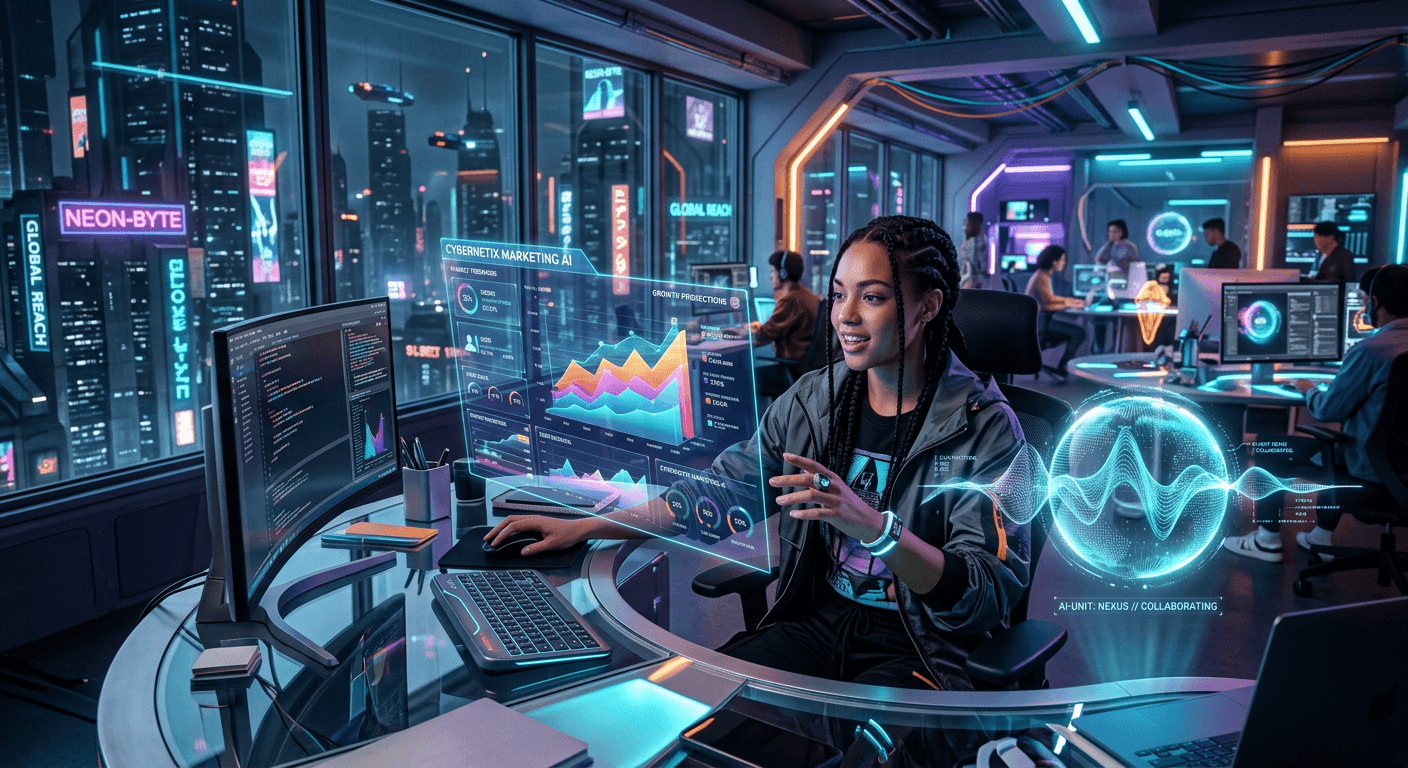
If you look at the landscape of advertising today, it feels like we are standing on the edge of a massive cliff, staring down into a future defined by machine learning and automation. Using ai for marketing isn't just a fancy trick for tech giants anymore; it is the baseline for anyone who wants to actually survive in this noisy digital ecosystem. Honestly, if you aren't integrating some level of computational intelligence into your workflow by now, you might as well be sending carrier pigeons to your target audience. It moves that fast.

Quick Summary
Artificial intelligence in marketing is the strategic deployment of data-driven algorithms to automate customer segmentation, content creation, and predictive analytics. By leveraging machine learning, brands can deliver hyper-personalized experiences at scale, drastically improving conversion rates while reducing the manual labor typically associated with complex digital advertising campaigns.
- Automated personalization engines drive higher user engagement.
- Predictive data modeling helps anticipate future consumer behaviors.
- Generative tools streamline content production for various social channels.
Table of Contents
- Quick Summary
- The Evolution of AI in Marketing
- Core Trends for 2026
- Strategic Shifts for the Modern Marketer
- FAQ
- Recommended Reads
The Evolution of AI in Marketing
Remember when social media ads were just based on who clicked what? Those days are long gone. Today, the ai digital marketing space has transformed into a high-stakes arena where the algorithm knows what you want before you even search for it. It is like having a crystal ball that runs on coffee and electricity. If you ask me, the speed of this evolution has been nothing short of terrifying - and beautiful.
Marketers aren't just pushing buttons; they are training systems. The role of the professional has shifted from a manual "doer" to a strategic "conductor" of machines. It sounds simple, right? Just feed the data, wait for the output, and bank the ROI. But it is messy. It is complex. And it is absolutely necessary for improving your brand strategy.
Core Trends for 2026
By 2026, the term "AI marketing" will likely become redundant because it will be so deeply baked into every tool we touch. We are seeing a shift away from static templates toward living, breathing campaign structures that adjust in real-time based on how users interact with them.
Hyper-Personalization and Predictive Modeling
Imagine a website that rearranges its entire layout based on the emotional state of a user detected through their interaction patterns. That is not science fiction; it is the goal. Predictive modeling now allows us to see the "intent signal" long before a purchase occurs. It is about understanding the customer journey not as a straight line, but as a web of possibilities.
The Rise of Autonomous Content Creation
Generative models have become surprisingly good at maintaining brand voice. While I wouldn't trust a machine to write my wedding vows, it is perfectly capable of churning out a thousand variations of a Facebook ad to see which one sticks. This gives human creatives the space to focus on the big ideas rather than getting bogged down in copy revisions.
Strategic Shifts for the Modern Marketer
So, where does that leave you? The modern ai marketer needs to be a hybrid of a data analyst and a creative director. You need to know how to read the logs, but you also need to know why they matter to the human being on the other side of the screen. If you ignore the "human" part of digital marketing, you are just making noise, not connections.
Optimizing Workflows with AI Tools
Efficiency is the name of the game. Using advanced tracking tools to monitor how your AI agents are performing is a full-time job. It is a continuous loop of testing, failing, and pivoting. Do you have the infrastructure to support that kind of rapid iteration? Most teams don't, which is why the gap between the winners and losers is widening.
Ethical Data Handling and Privacy
Here is a hot take: Privacy is going to be the biggest competitive advantage of the next decade. As AI tools hoover up more data, brands that can prove they are using that information ethically—and transparently—will win the trust of consumers who are increasingly tired of being treated like products. It is not just about legality; it is about building a brand that feels safe.
FAQ
Is AI going to replace human marketers? Not entirely. It will replace the tasks, not the strategy. The human element of empathy and creative vision is still something that algorithms haven't quite mastered.
What is the best way to start with AI in marketing? Start small. Use AI for data organization or A/B testing copy. Don't try to automate your entire department overnight or you will just create a very efficient disaster.
How does artificial intelligence impact SEO? It changes search from keyword matching to intent matching. You aren't writing for bots anymore; you're writing for a machine that thinks it understands what a human wants.