How to Execute POP Trade Marketing for Immersive Retail Experiences
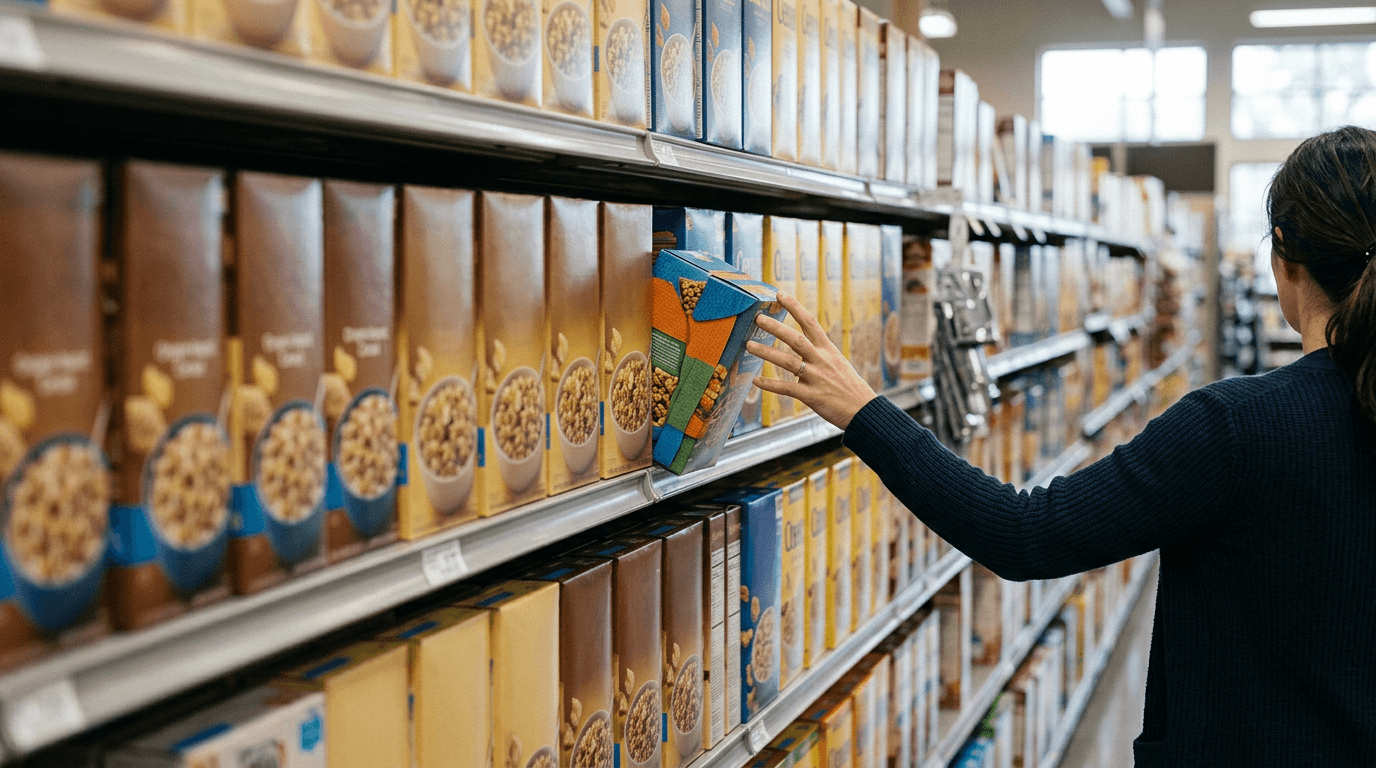
A customer walks down the detergent aisle of a São Paulo supermarket, ignoring rows of identical plastic bottles until a subtle citrus scent and a distinct floor texture break their autopilot. That physical interruption is the mechanics of pop trade marketing at work. It is not about louder signage or brighter endcaps; it is about engineering moments of friction that force a shopper to process a brand before they reach for their default choice. When brands treat the shelf merely as storage rather than a medium for interaction, they forfeit the only environment where the product, the customer, and the wallet exist in the same physical space.
Quick Summary
POP trade marketing is the strategic manipulation of the physical retail environment - using sensory triggers, spatial design, and localized data - to disrupt shopper autopilot and drive immediate conversions at the point of purchase.
- Sensory disruption: Use scent and texture to bypass visual fatigue in crowded aisles.
- Local alignment: Adapt physical displays to regional search intent and localized foot traffic patterns.
- Privacy-first tracking: Measure interaction times at the shelf without capturing personally identifiable information.
- Friction mapping: Identify exactly where a shopper transitions from navigating to actively evaluating.
Table of Contents
- 1. Map the Shopper Journey at the Shelf
- 2. Deploy Marketing Sensorial Triggers
- 3. Align PDV Marketing with Local Intent
- 4. Implement Compliant Measurement Mechanisms
- Common Pitfalls & Troubleshooting
- FAQ
- Recommended Reads
1. Map the Shopper Journey at the Shelf
Before installing a single display, you must document the exact physical sequence a shopper follows when entering the category aisle. Most trade marketing fails because it assumes the shopper is looking for the brand. In reality, the shopper is looking for a category, and they navigate by color blocks and familiar shapes. If your display requires reading a paragraph of text before the shopper has stopped moving, the investment is wasted.
Where visual processing stops
The human eye scans a retail shelf in a "Z" pattern, similar to reading a web page, but this scanning is highly accelerated due to the overwhelming visual noise of a modern supermarket. Shoppers do not read; they filter. To interrupt this filtering, you must introduce a physical or structural anomaly.
Practical rule: Never place key decision-making information below knee level or above eye level; reserve those zones for brand blocking and use the "strike zone" (waist to eye level) strictly for interactive or sensory disruption.
Mechanically, this means using dimensional displays that physically protrude from the standard shelf alignment by even a few centimeters. This slight protrusion catches the peripheral vision of a shopper pushing a cart, forcing a micro-pause. That micro-pause is the only window you have to deliver the sensory or value proposition. If you fail to capitalize on that split second, the shopper's gaze moves back to the center of the aisle, and the opportunity is lost.
2. Deploy Marketing Sensorial Triggers
Visuals alone can no longer carry a point-of-sale execution. The retail environment is saturated with high-contrast colors and flashing digital screens. To create genuine immersion, you must engage the secondary senses. Using marketing sensorial tactics effectively means deploying scent, sound, or touch to communicate the product's value proposition before the shopper even registers the packaging.
Scent and sound bypass visual fatigue
Olfactory processing is directly linked to the brain's limbic system, making scent the fastest way to trigger association without requiring conscious cognitive effort. For example, a brand selling premium coffee beans can use localized dry-air scent diffusers hidden within the display to emit the smell of roasted coffee. This scent travels further than the visual range of the display, effectively acting as an invisible beacon that draws the shopper toward the specific aisle.
Sound works similarly but requires extreme precision. Overhead supermarket announcements create a chaotic audio environment. Instead of adding to the noise, effective sensorial displays use directional audio speakers (parametric speakers) that beam a narrow column of sound directly in front of the product. A shopper stepping into this invisible column hears a distinct audio cue - like the cracking of a crisp beverage can - while shoppers two feet away hear nothing. This localized immersion creates an intimate brand experience in the middle of a public space.
3. Align PDV Marketing with Local Intent
The physical execution must match the digital reality of the specific neighborhood. A display that performs exceptionally well in a high-density urban center in Rio de Janeiro will likely fail in a suburban hypermarket in Minas Gerais if the local consumer intent differs.
Regional data dictates physical placement
Effective pdv marketing integrates hyper-local search data with physical retail planning. If search data indicates that a specific neighborhood has a high concentration of queries related to "quick healthy dinners," the physical display in that local supermarket should prioritize speed and health cues, utilizing stark, clean lighting and minimalist shelving.
If you want to understand how regional data integration changes campaign outcomes, reading about RapidWombat - AI-Driven SEO for Brazilian Businesses illustrates how mapping hyper-local intent across different states informs both digital and physical marketing strategies. You must treat each retail location as a separate node, adjusting the sensory inputs and messaging based on what the local population actually values, rather than pushing a monolithic national campaign.
4. Implement Compliant Measurement Mechanisms
An immersive display is a liability if you cannot prove it drove a lift in sales relative to the baseline shelf presence. However, tracking shopper engagement in physical spaces introduces significant legal and ethical considerations, particularly concerning data privacy.
LGPD compliance in physical spaces
In the Brazilian market, capturing shopper data must comply strictly with the Lei Geral de Proteção de Dados (LGPD). You cannot use facial recognition cameras that store biometric data without explicit consent, which is impossible to gather at an open retail shelf.
The mechanism for compliant measurement relies on anonymized spatial tracking. Using infrared break-beam sensors or Time-of-Flight (ToF) cameras, you can measure the "dwell time" - how long a human mass stands in front of the display - without ever capturing a face or identifying feature. You correlate this anonymous dwell time data with the store's point-of-sale transaction data for that specific SKU. If the dwell time spikes but conversions remain flat, your sensory trigger successfully interrupted the shopper, but your price or packaging failed to close the sale. You fix the packaging, not the display.
Common Pitfalls & Troubleshooting
Trade marketing campaigns often look flawless in the agency mock-up but fail violently in the actual retail environment. Here are the most common operational failures that present as "poor shopper engagement" and how to fix them.
Symptom: High display interaction but zero sales lift. Diagnosis: The sensory trigger is overpowering the product. Shoppers are playing with the directional audio or smelling the diffuser but are not connecting the experience to the item on the shelf. This is the most common failure in experiential marketing. Fix: Reduce the intensity of the sensory element and ensure the physical lighting immediately redirects the shopper's eye from the sensory node down to the actual product packaging.
Symptom: The display falls apart or loses functionality within 48 hours. Diagnosis: Poor retail operational integration. You built a delicate display that cannot survive the aggressive restocking habits of supermarket employees or the impact of heavy shopping carts. Fix: Reinforce the base of all floor-standing units with high-density polyethylene (HDPE) kick plates and ensure all digital or sensory components are housed behind shatter-resistant polycarbonate.
Symptom: Scent diffusers cause complaints from store management. Diagnosis: Scent bleeding. The fragrance is migrating into adjacent categories (e.g., coffee scent drifting into the fresh produce section), violating the retailer's operational guidelines. Fix: Switch from liquid-based atomizers to dry-air scent diffusion technologies, and calibrate the HVAC airflow in that specific aisle to ensure the scent is trapped within a three-foot radius of the display.
Symptom: Directional audio is inaudible during peak hours. Diagnosis: The ambient noise floor of the supermarket was measured during off-peak hours (e.g., Tuesday morning) rather than Saturday afternoon. Fix: Implement dynamic volume control using a localized microphone that measures ambient noise and automatically scales the parametric speaker output to remain exactly 3 decibels above the ambient noise floor.
FAQ
How much sales lift is required to justify an immersive POP display?
It depends on the margin of the product and the lifespan of the display. Typically, temporary corrugated displays must generate a 15-20% sales lift to break even, while permanent fixtures with sensory elements require a 30% sustained lift over six months to justify the capital expenditure.
Can sensory marketing be used in small convenience stores?
Yes, but the scale must change. In tight spaces, rely on tactile elements (textured shelving strips) rather than scent or sound, which easily overpower a small footprint and agitate the store staff.
Who is responsible for restocking the interactive display?
Never assume the retailer will do it. You must contract third-party merchandisers or route your own sales representatives to restock and maintain the technical components of the display. If a store clerk has to troubleshoot a broken audio sensor, they will simply unplug the entire unit.
Does localized data actually change physical display design?
Absolutely. A region with an aging demographic requires larger typography and higher-contrast lighting on the display, whereas a university-adjacent store benefits from QR-code integrated interactions and minimalist copy.